Invocations for Birth
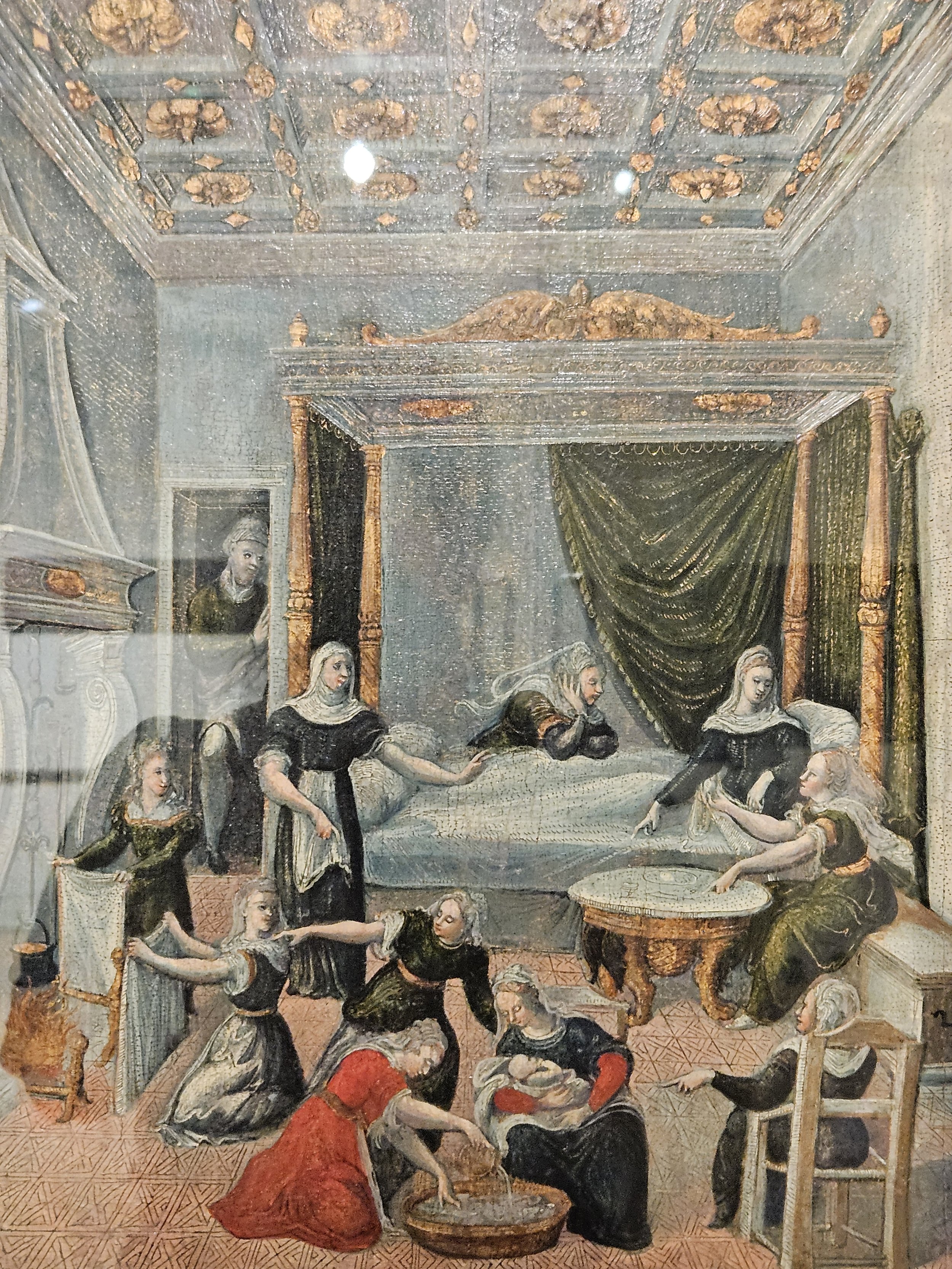
I was lucky enough to catch the last few days (maybe even THE last day of the 'Expecting Birth, Belief and Protection’ exhibition at The Wellcome Collection.
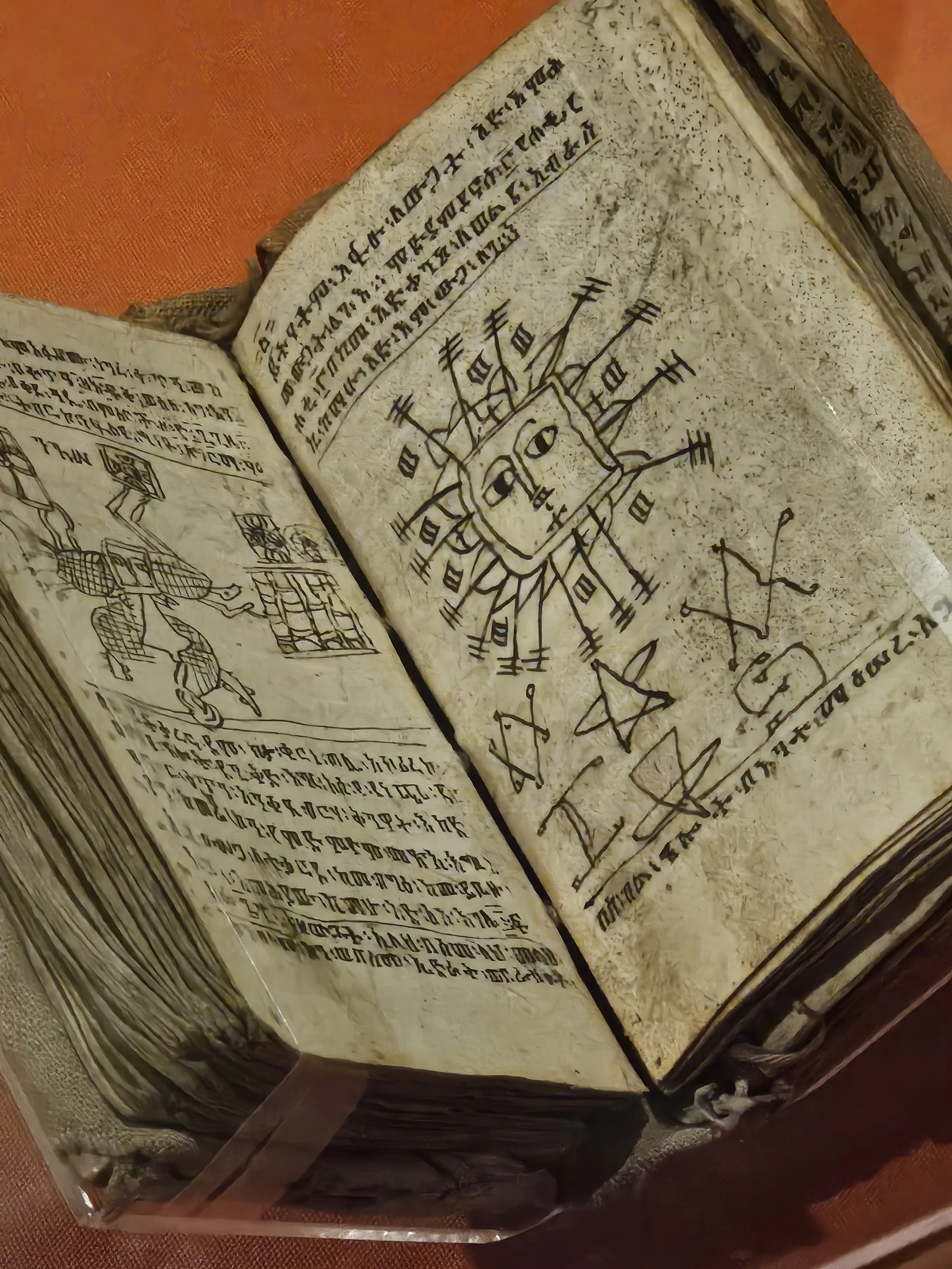
Centring around a birth scroll, the show explored ritual and protective practices around pregnancy and birth. The scroll itself was detailed with text and iconography to bring safety during birth. But the very same scroll also invokes defense against battles, storms and plague... this struck me as recognition of both the enormity, inherent danger and life changing essence of childbirth and a leveling of these gendered experiences: childbirth as something associated with the feminine and battle with the masculine.
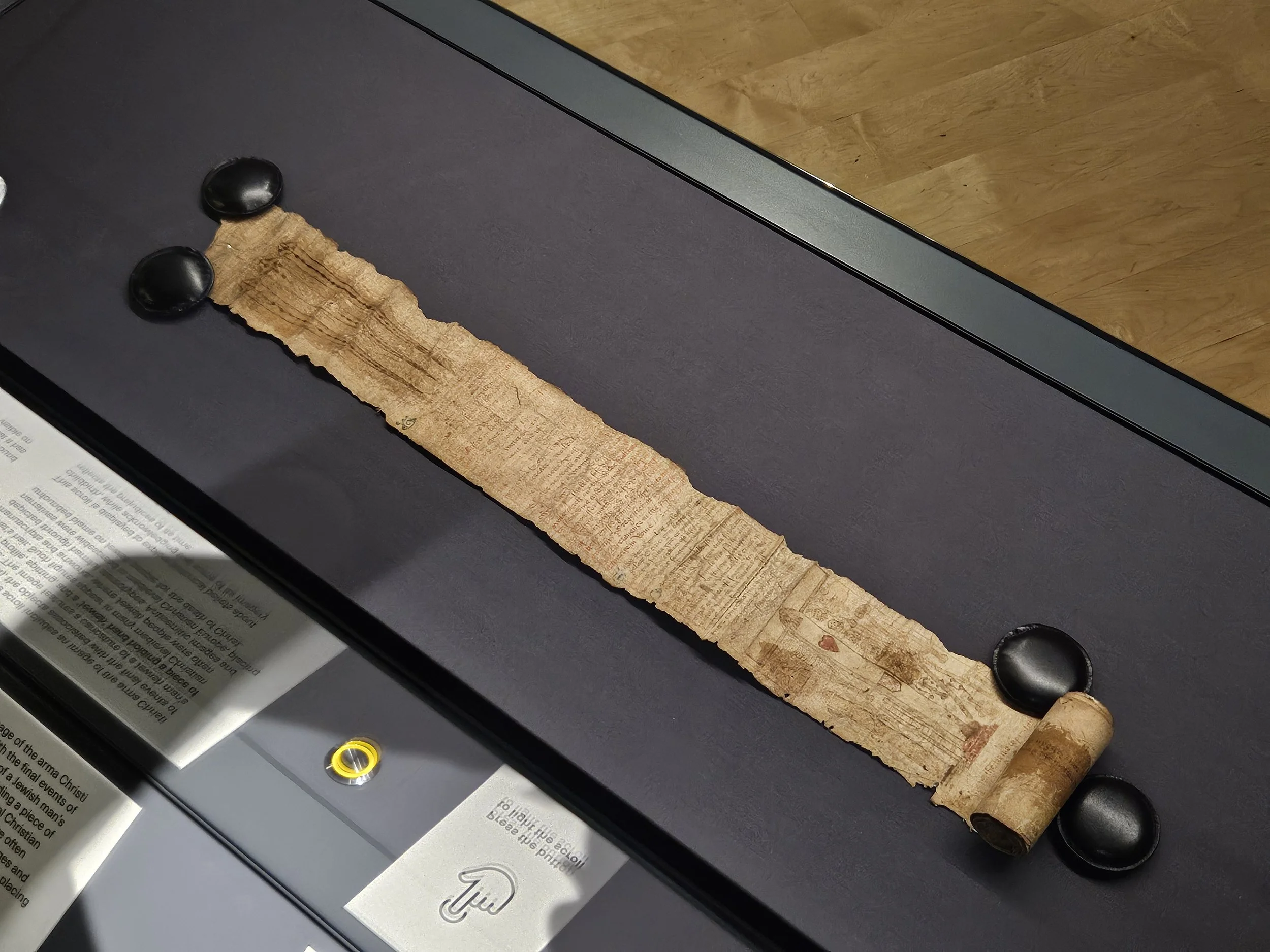
The birth scroll displayed at The Wellcome Collection showing text and illustrations.
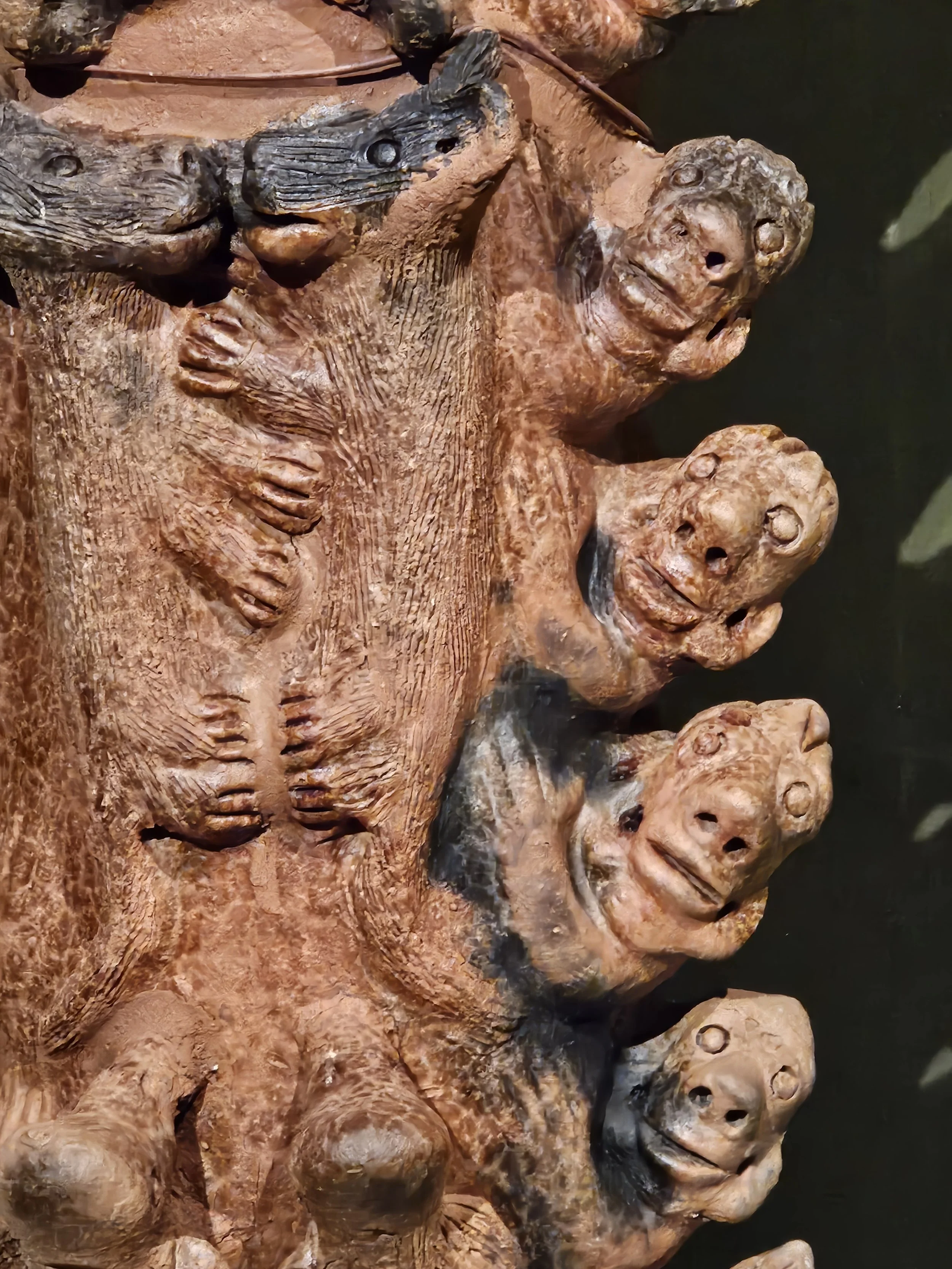
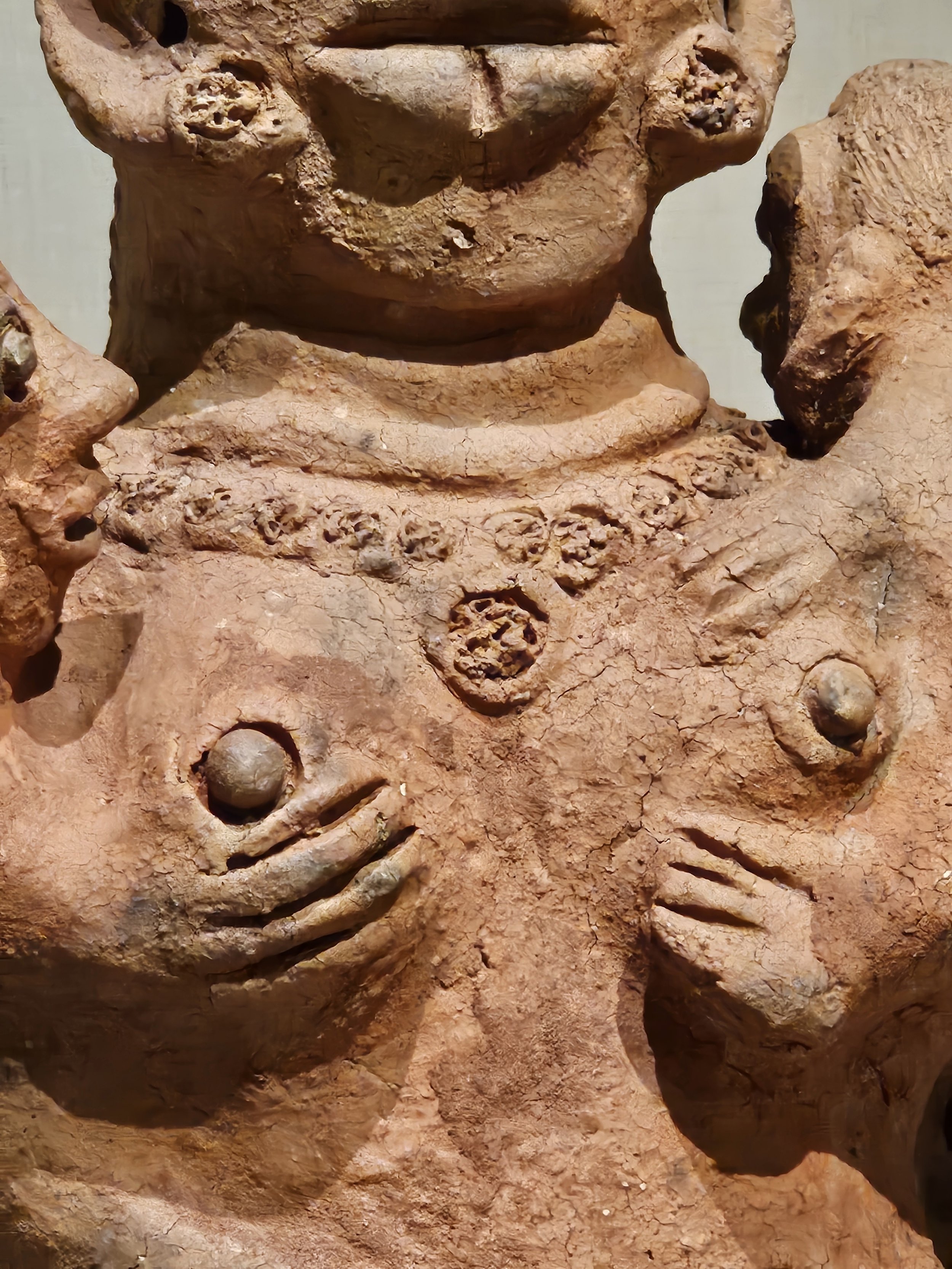
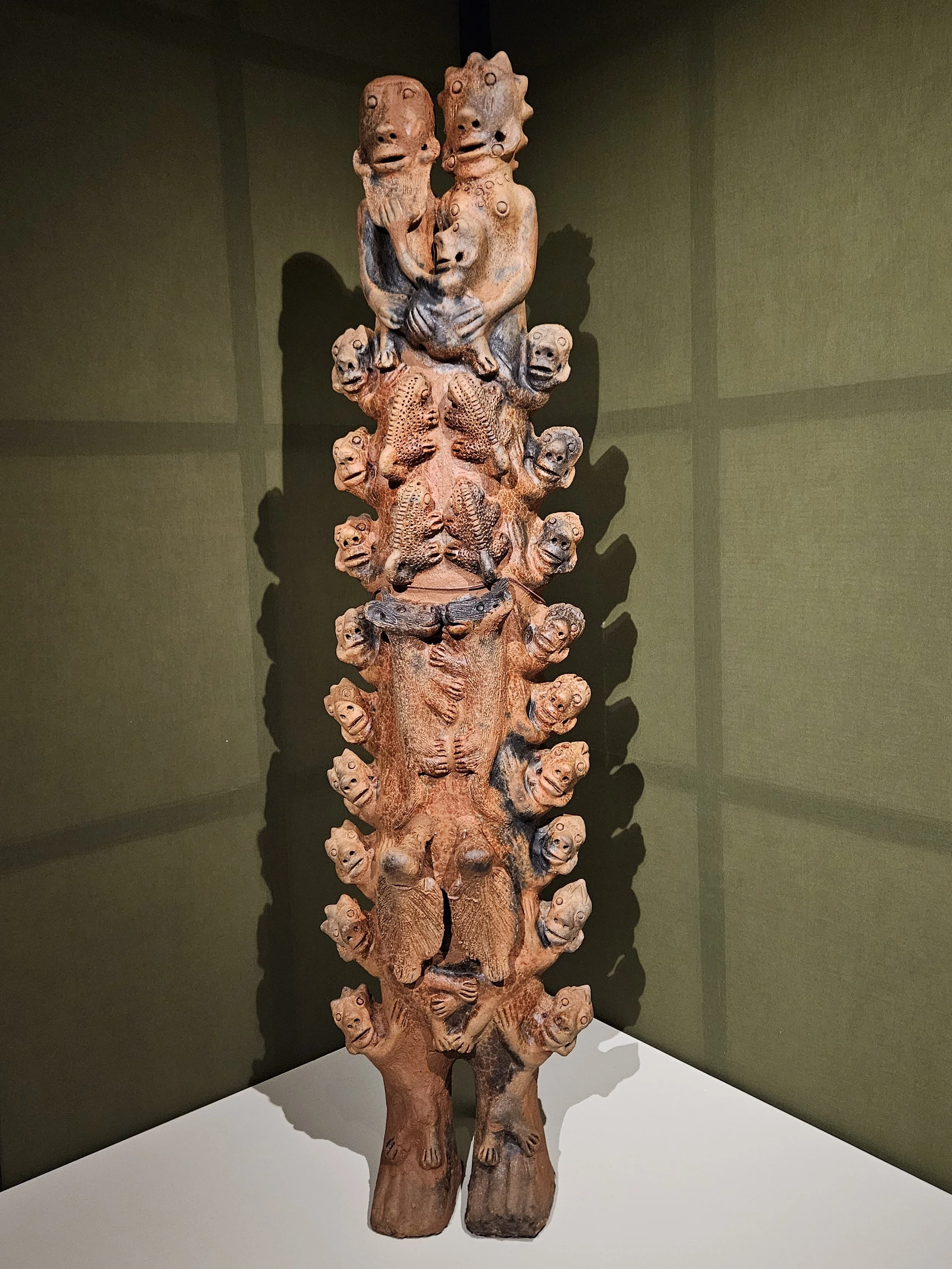
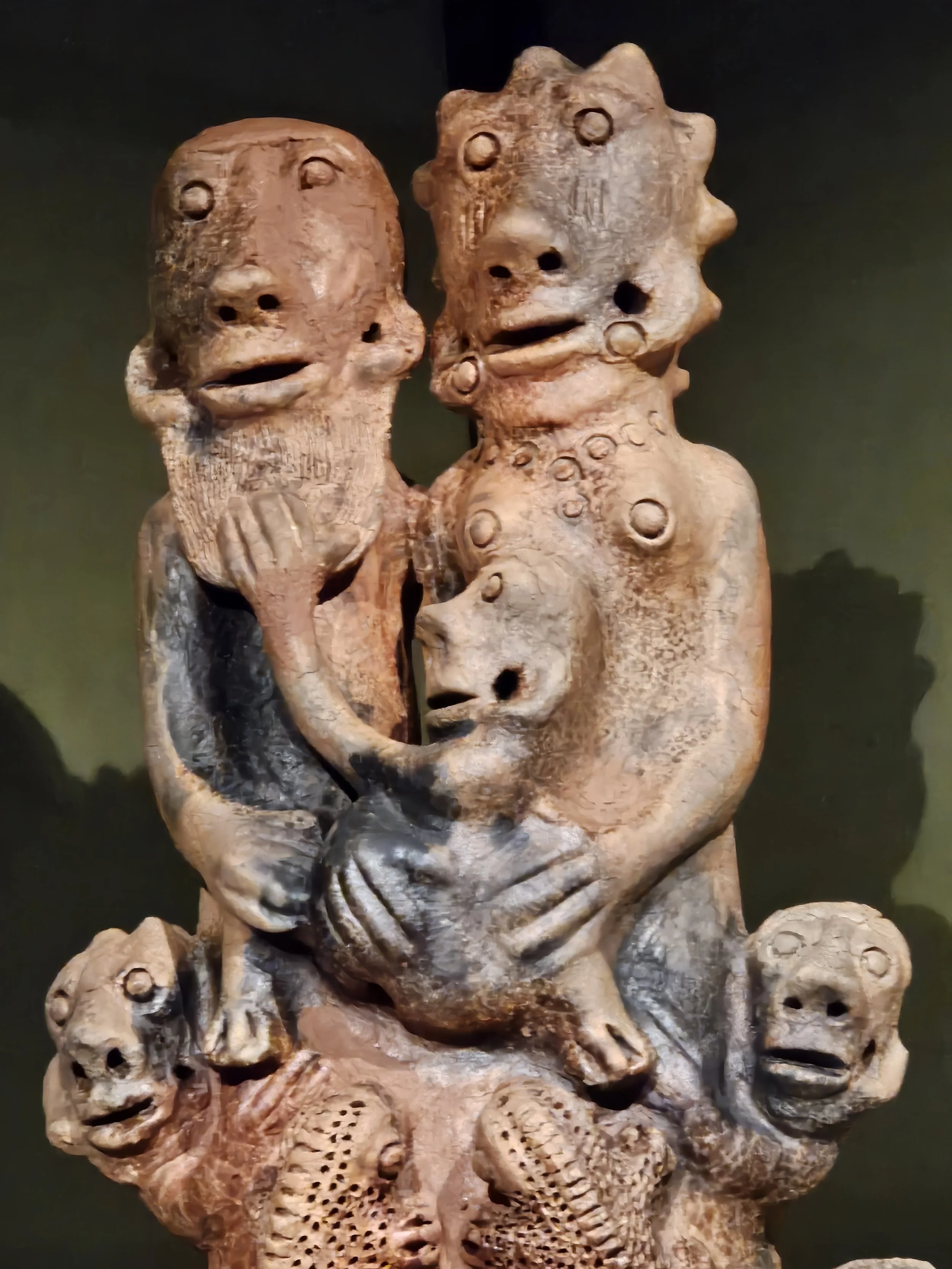
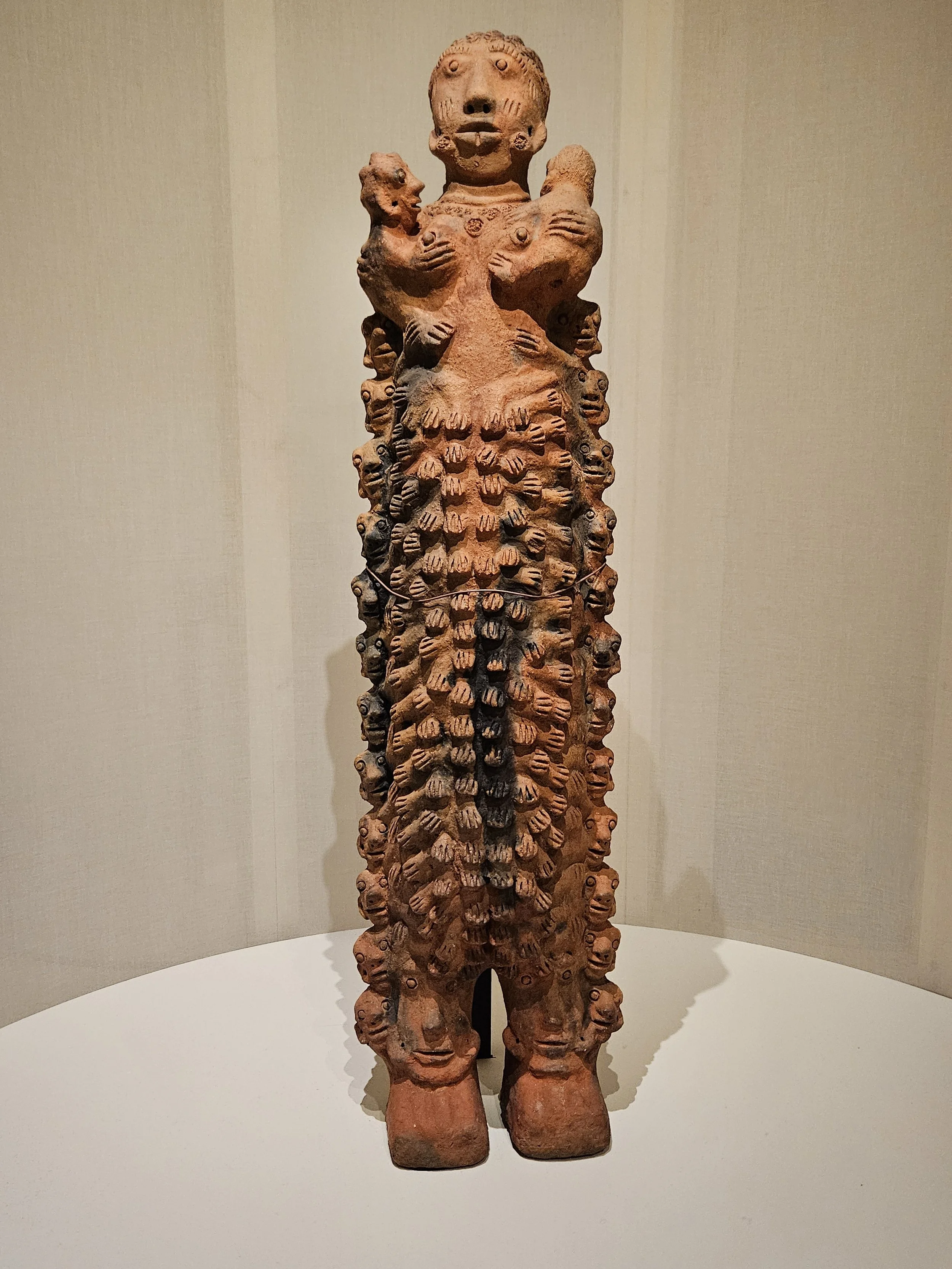
I always appreciate the Wellcome's approach to curating, displaying historical artefacts alongside contemporary art. Seyni Awa Camara’s unglazed terracotta sculptures are human height maternal figures embellished with climbing, clambering figures. The exhibition texts tells us that these figures are children, animals and parents, making these votive statues to intergenerational, interspecies and atemporal mothering. The multitude of these figures suggests the many people and ways in which we mother. One other reason for the quantity of these figures is the artist’s experience of - in the exhibition's words - multiple failed pregnancies and miscarriages. Camara later adopted her husband's sons as well as other children. These statues therefore hold, in tandem, all iterations of her children and the human and more than human families so many of us are a part of.
The Wellcome Collection describes Camara’s practice as exploring "motherhood as both an intimate and symbolic role". This resonates with me deeply, and I have recently been trying out a new language to encompass the many layers and aspects of motherhood which are not tied to biology: ”motherhood as a psychosocial condition".
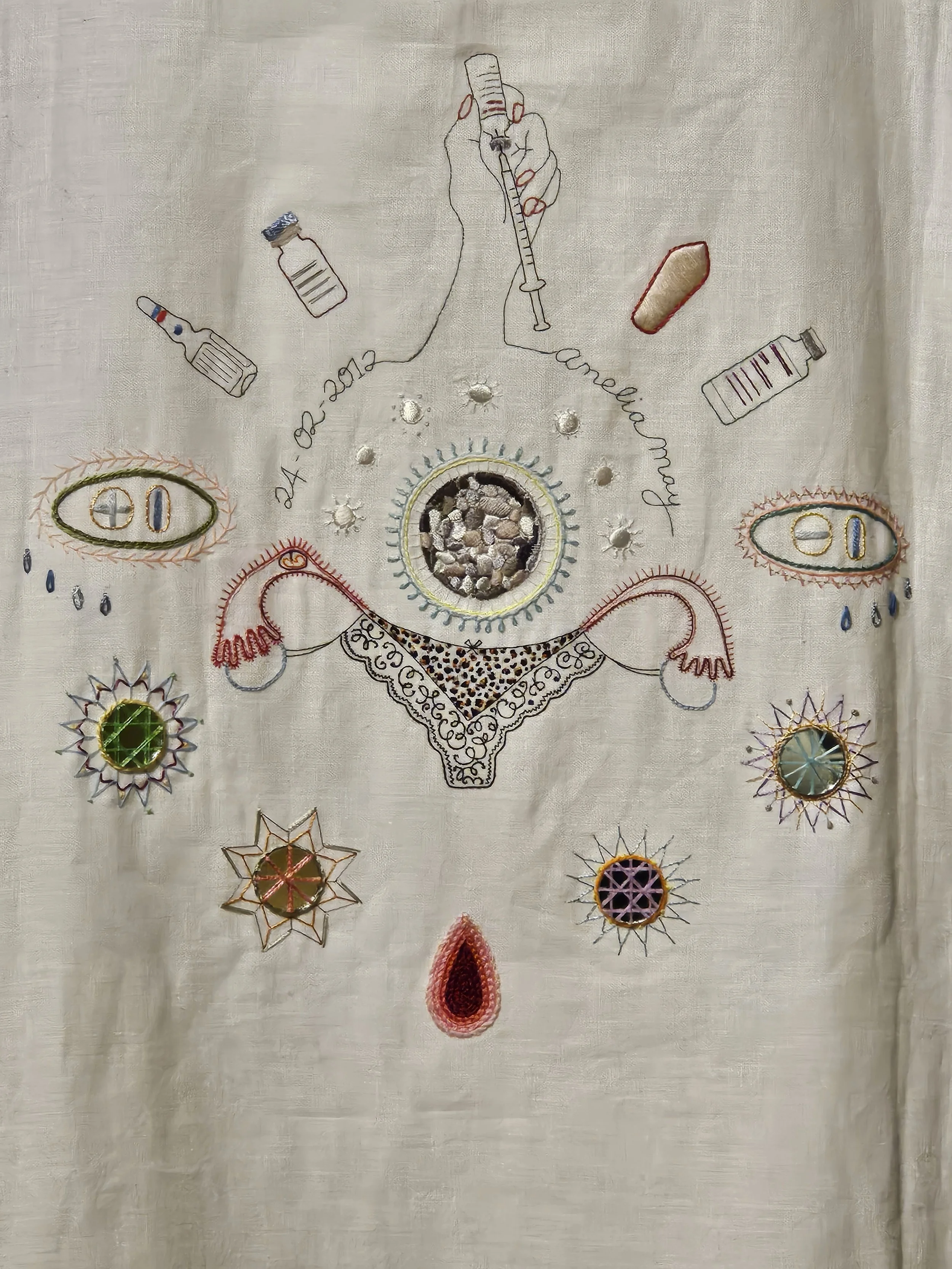
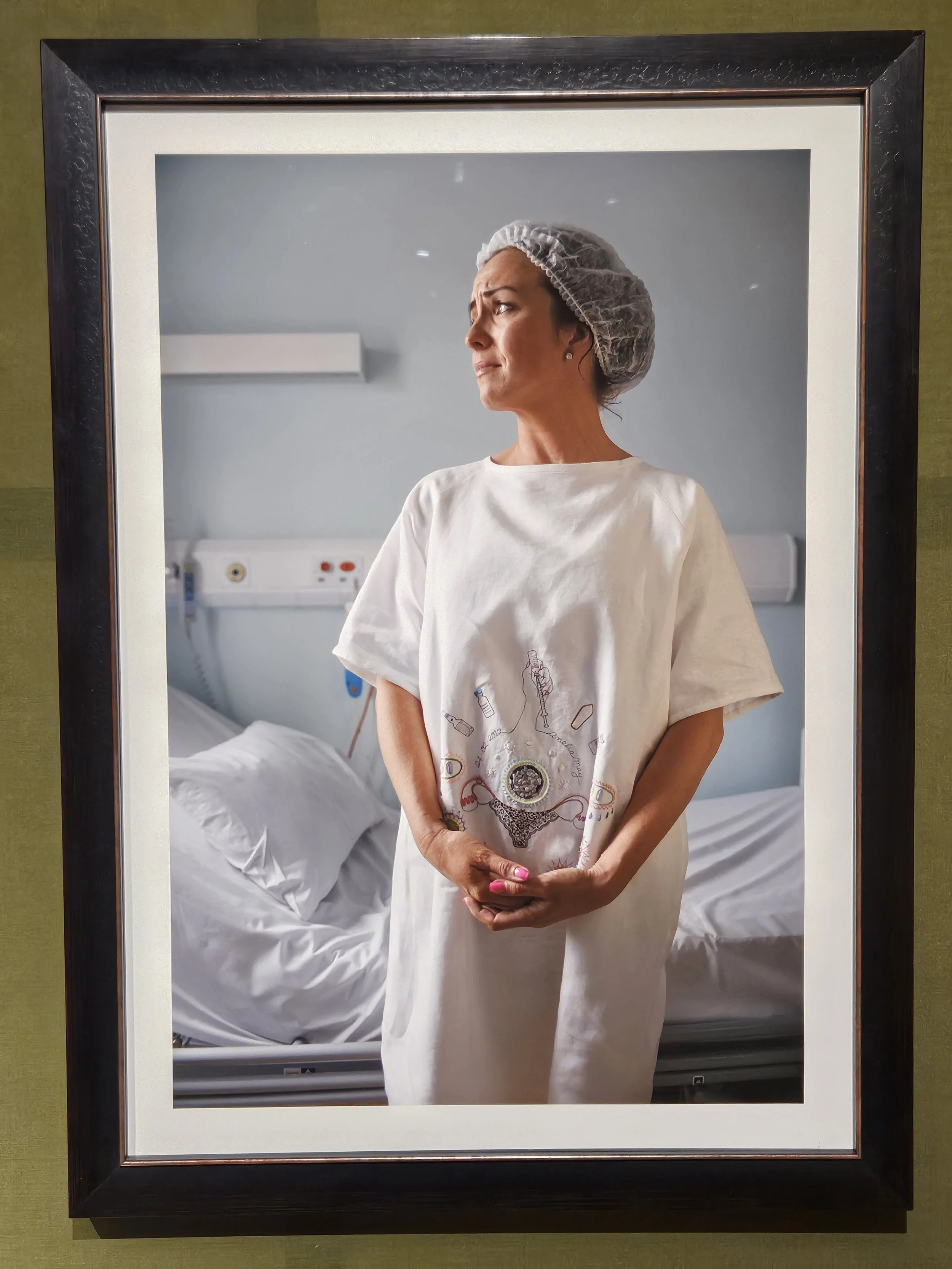
Another contemporary work included in the show was "Melanie's Gown" by Tabitha Moses, part of her series "Investment", which explores her experience of multiple rounds of IVF. Tabitha has embroidered talismanic symbols relating to the IVF experience onto a white long shirt worn by Melanie. Although made centuries apart, both this contemporary work and the birth scroll use symbols relevant to their times to invoke ritual protection and evoke narrative.
However to me, the more powerful resemblance between these 2 pieces is that both had intended uses to be worn across the pregnant belly. Researchers from the Wellcome have found proteins on the scroll that show it was used during labour and birth. Whether we believe in this power or magic literally or find strength from the metaphors, birthing people have surrounded themselves with meaning, protection and strength for centuries.
Perhaps what 'Expecting Birth, Belief and Protection' quietly argues is that pregnancy, birth and mothering have never been only biological acts. Throughout the centuries we have called for more-than-human support, care, guidance, protection and meaning for these transformational junctures. They are liminal spaces — rooted in the body and the ordinary, and at the same time reaching toward something spiritual, dream-like and magic. Birthing people have always known this. They have been finding ways to say so for centuries.